
How Artificial Intelligence is Impacting Architecture Students
In just four years of architecture school at Roger Williams University thus far, AI has already grown immensely in what it can produce. From renders to ideas, there should at least be a discussion on the critiques of this new technology and what negatives come with it.
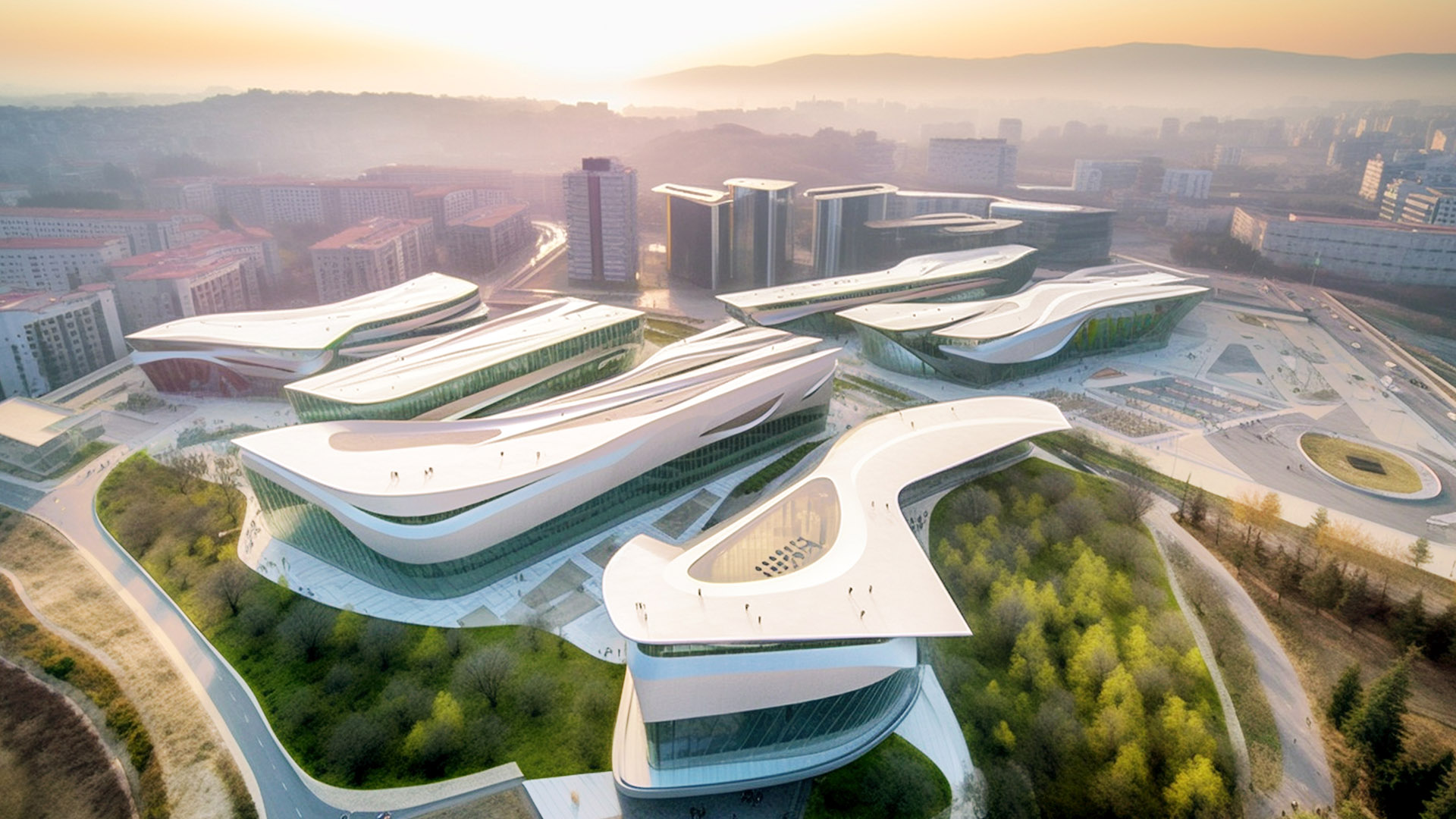
The largest use for AI in the field of architecture at this point, is within the creation of Renders. These are realistic “images” of what the final project will look like before it is built (This photo above is AI). Renders allow the client to really picture and feel what their plans are going fill the space. That being said, it is one of the most important parts of really closing a deal. This could be a make or break in deciding to go with one firms ideas over another. Within recent years AI has completely integrated itself into the render market where they are becoming more realistic then ever.
How it works currently, is that a final model will be built by the architect and then they can assign “materials” which are basically just different colors. Then, they will put this image into an ai database and can tell it, “make the wood color real oak.” So on these commands go until AI has completely added life like render quality to every inch of the drawing.
My critique with this comes within architecture school. These programs are available to every student and are encouraged in order to make the best picturesque feel to their render. However, it removes the learning curve to develop a skill to make this images by hand the “analog” way. The reliance on AI to do the work of a creative job removes that creative skill that all architects need. I am not saying that AI rendering is necessarily a bad thing, but I believe that students in school should first have to master the art of creating realistic renders by hand.